In Timor-Leste, a sacred house gives thanks for the new corn harvest
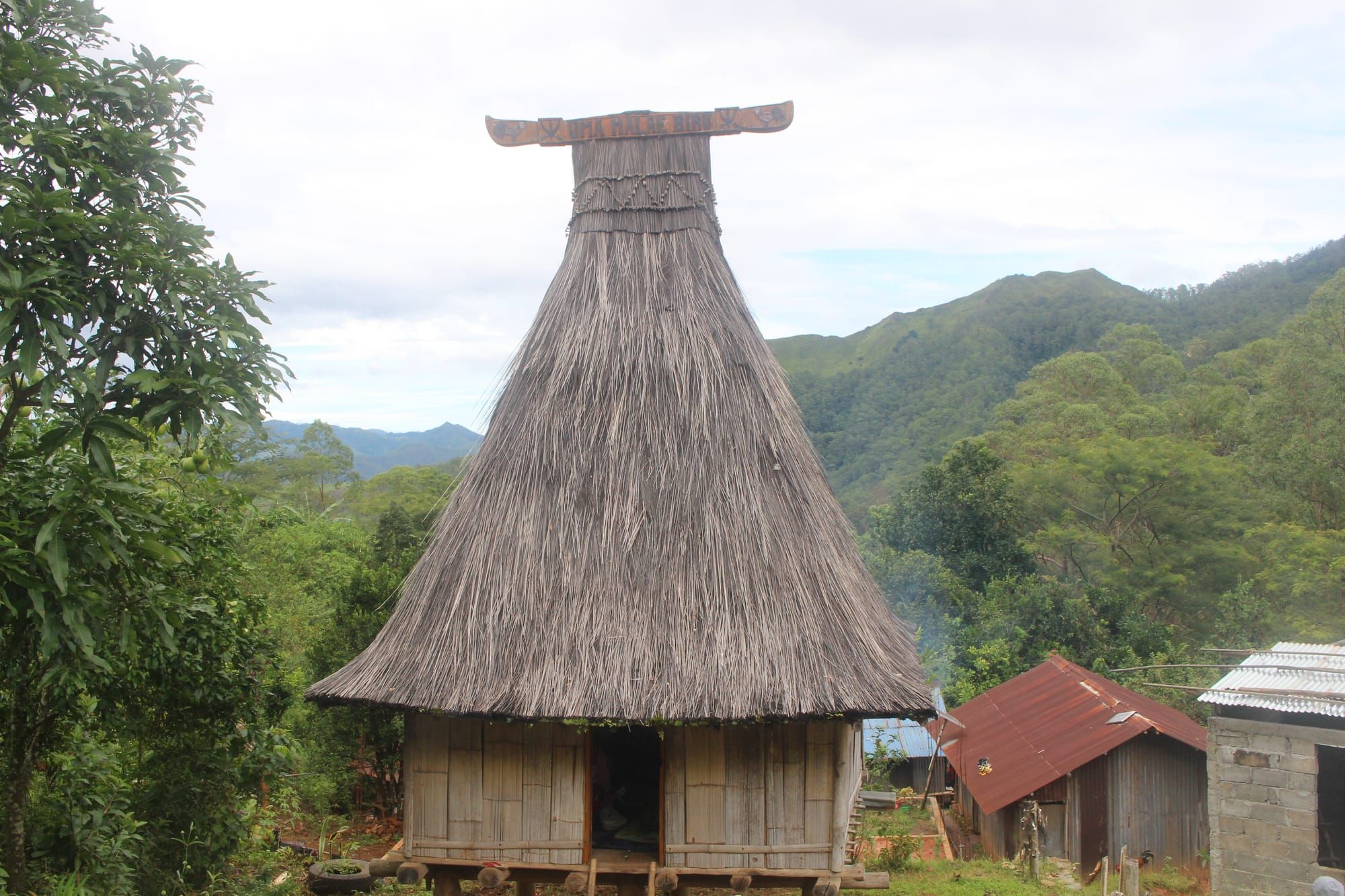
Diligente was allowed inside the Uma Malae Biru for Sau Batar, an ancestral ceremony in which families offer corn from the new harvest and look for signs from their ancestors.
By Antónia Martins
Originally published by Diligente on Feb. 20, 2023.
DILI, Timor-Leste — The only sounds are birdsong, clucking chickens and the buzz of a cicada. Green mountains stretch to the horizon. It is 8 a.m. in the forest of Tasi-Fatin, a suco, or village, in Manatuto municipality in central Timor-Leste, and the ceremony is about to begin. Sucos are local administrative units made up of hamlets.
The “uncles,” as the family heads are respectfully called, gather with the women and children around the Uma Malae Biru, a sacred house, or uma lulik, to which several families belong.
Inside are heirlooms passed down from the families’ ancestors. Such houses are at the heart of lulik, a word meaning “sacred” that also refers to the ancestral beliefs governing relationships among people, nature, the ancestors and the cosmos. Many sacred houses were burned or destroyed during the Indonesian occupation, from 1976 to 1999, and rebuilding them became a national priority after independence.
The families have come for Sau Batar, an ancestral Timorese tradition of giving thanks for the annual corn harvest. Sau means to offer and batar means corn. The ceremony is made up of animist rituals held in a sacred house, a place of worship. Outsiders are rarely admitted, but the Uma Malae Biru opened its doors to Diligente.
Old corn out, new corn in
The first to enter is the lia-nain, Tetum for “owner of the word,” who leads the rituals and speaks for the members of the sacred house. At the Uma Malae Biru, the role falls to Sebastião da Costa, affectionately known as Uncle Tian. As everyone watches, he climbs the stairs holding corn from the previous harvest. Inside, he shells it.
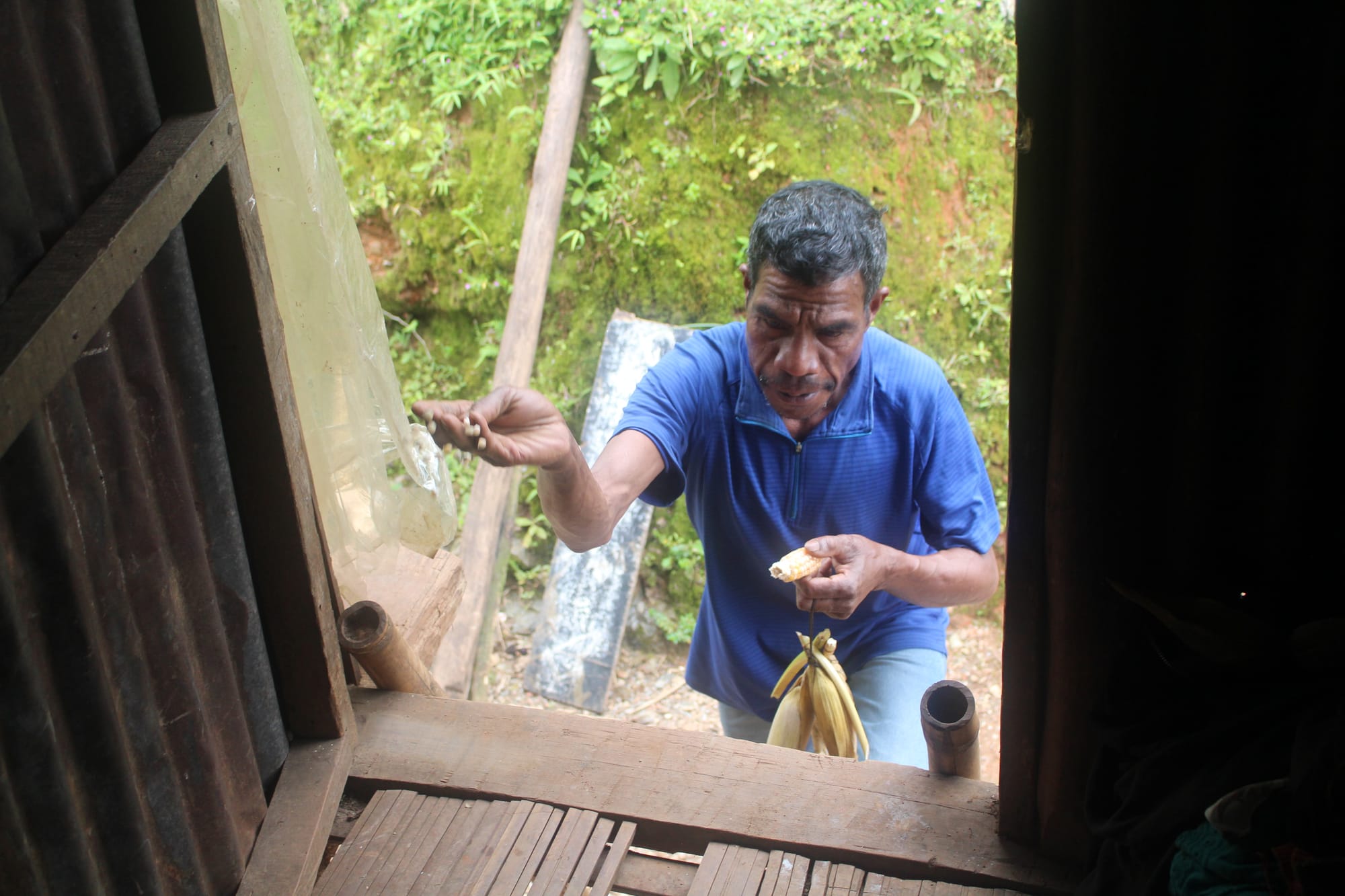
Outside, Uncle Peregrino waits with corn from the new harvest. He shells half an ear and chews a few kernels, which must stay in his mouth. Then he climbs the stairs, tossing freshly shelled kernels into the house with each step. “Licença!” — “Excuse me!” — he calls out as he steps inside.
The lia-nain “receives” him by throwing back kernels from the old harvest. Old grain and new grain fly in opposite directions. Praying in Idaté, the local language, the lia-nain says: “Take the old. Give us the new.” Idaté is a variety of Idalaka, one of Timor-Leste’s 15 recognized national languages.
Uncle Peregrino hands the ears of new corn to the head of the sacred house. Then he takes the chewed corn from his mouth and uses it to mark the sacred objects, also called lulik, and the chief’s forehead. This is the kuta ritual, which permits the new corn to be eaten. The other elders, women and children then join the two men inside.
So begins Sau Batar. The ceremony honors the food the community harvested at the start of the year and gives thanks for it: the new corn is offered to replace the old. Corn, an important food in Timor-Leste, stands for all the crops the suco has harvested.
Júlio da Costa, one of the youngest in the group, compared the ritual to the way the community marks Easter.
“Around that time, our suco usually offers wheat flour and rice to the church to give thanks for the resurrection of Jesus,” he said. “When we celebrate Sau Batar, we offer corn to the ancestors to ask that the families keep growing and thriving, that [the ancestors] protect us from disasters and bad luck, and that we prosper.”
An obligation, with consequences
Speaking solemnly and firmly, other family members called the ritual an “obligation.” Anyone who skips it or speaks ill of it, they said, faces “curses and punishments from nature.”
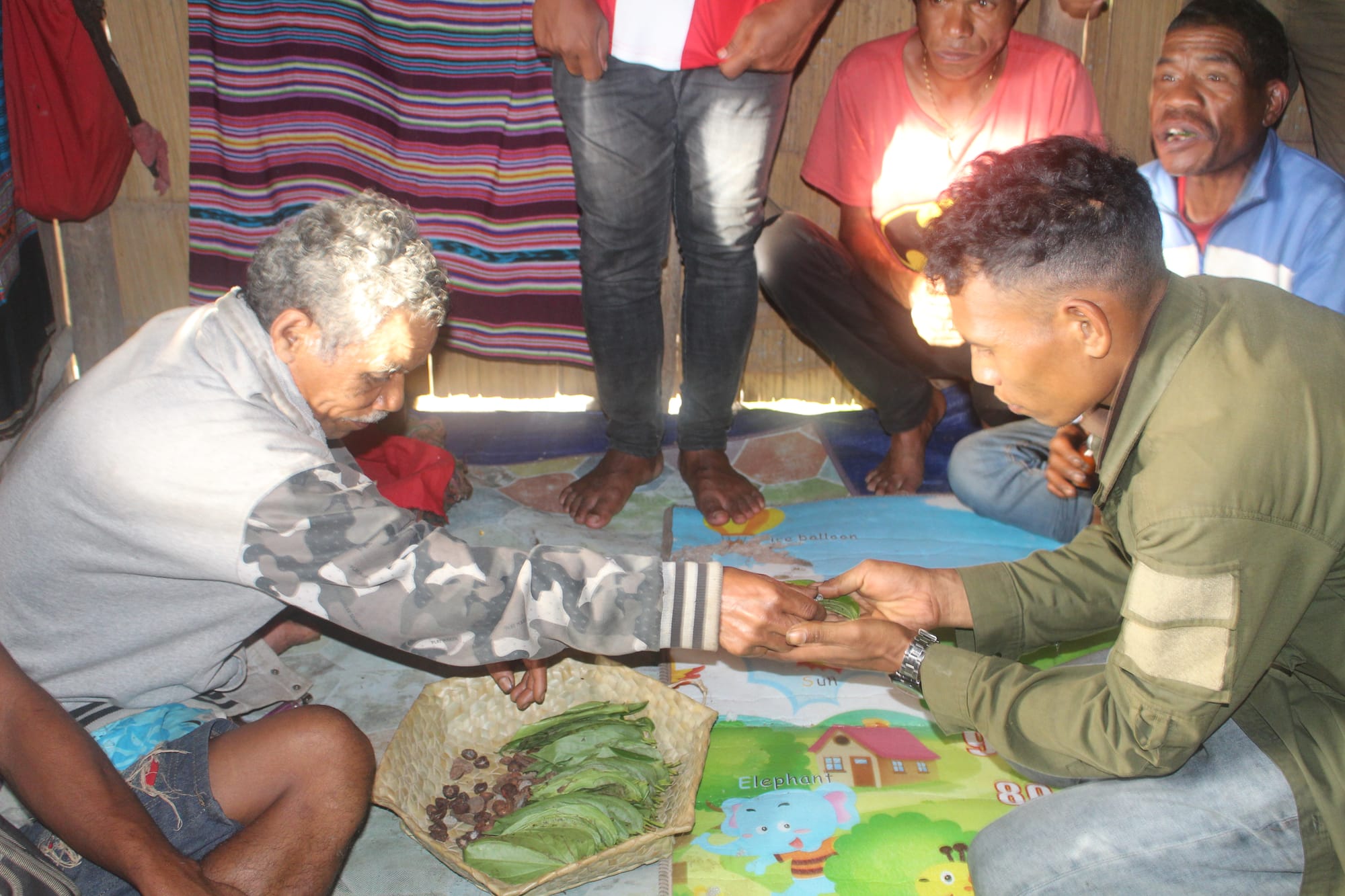
Those unable to hold the ceremony must at least receive betel leaves and areca nuts, which are handed out to all family members at the end of the ceremony. Chewed together with slaked lime, they are a customary offering to guests; turning them down is seen as a rejection of the host’s hospitality. In Timorese tradition, betel and areca are as essential as the air we breathe.
Sau Batar is practiced across Timor-Leste, though each sacred house does it differently, and the ritual itself has changed over time. The scale of the ceremony, particularly the number of people who attend, depends on what each family in the sacred house can afford.
Many sacred houses do not allow women inside. The Uma Malae Biru does, though access is normally restricted to family members. The lia-nain let Diligente in on one condition: the sacred objects could not be photographed.
Sacred objects and a sacrifice
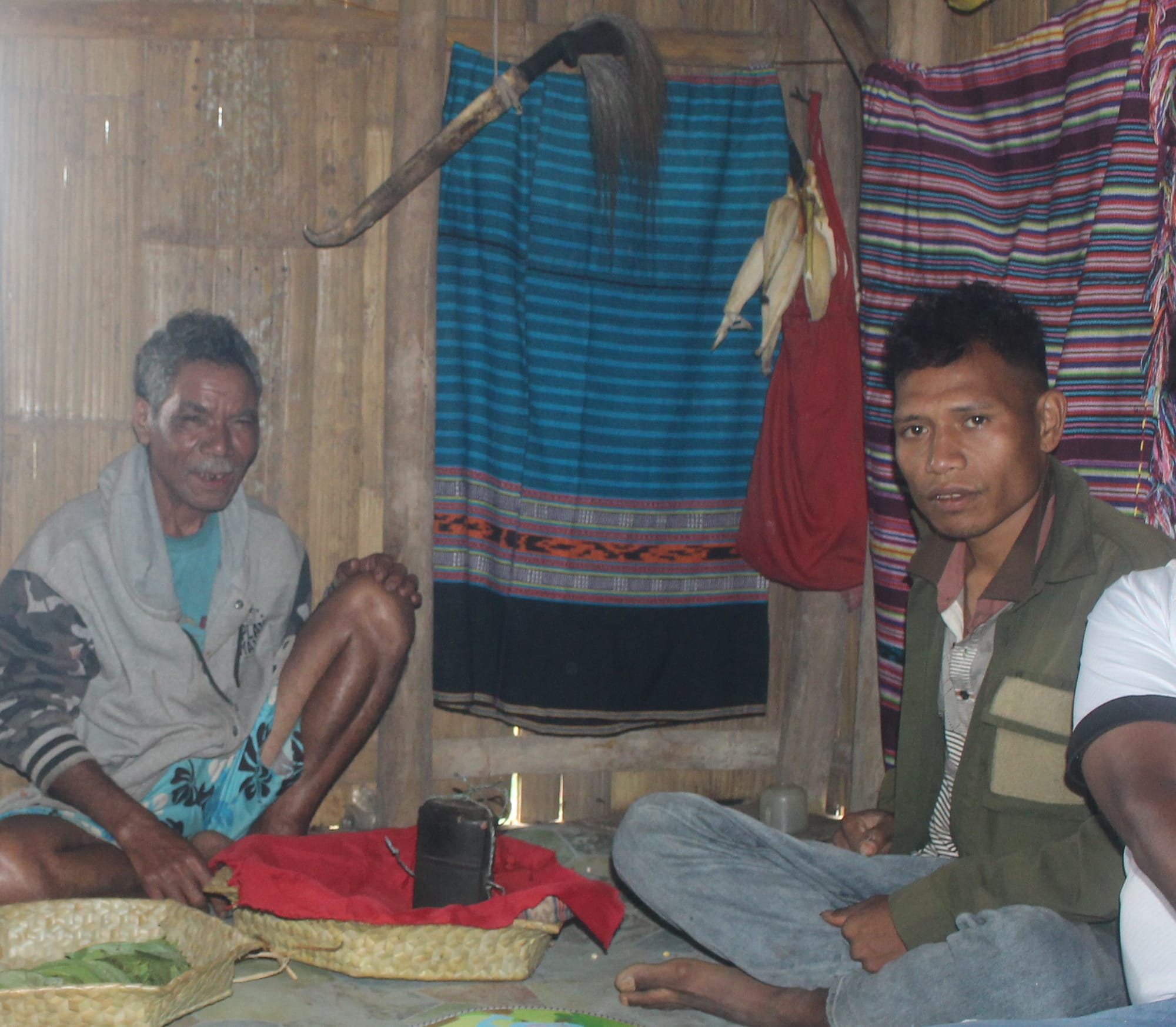
After the kuta ritual, the lia-nain prays with his eyes fixed on the sacred objects, which were inherited from the ancestors. Earlier, they were placed in a traditional basket called a lafatik. A second basket holds the areca and betel.
Both baskets rest in a corner beneath two tais, traditional textiles handwoven by women. The textiles hang on the bamboo wall alongside a sword, or surik, and ears of corn. Used in ceremonies and treasured as objects of value, tais were added to UNESCO’s list of intangible cultural heritage in need of urgent safeguarding in 2021. On the floor, the traditional and the modern meet: a candle and a Red Label whisky bottle containing tua sabu, a palm spirit.
Roosters, pigs, goats or buffalo may be sacrificed at Sau Batar. For this ceremony, the families chose a rooster to sacrifice and share.
The lia-nain holds the bird by the neck and strangles it while praying to the lulik and the bei-ala, the ancestors. He asks them for a sign indicating whether good fortune awaits the families of the Uma Malae Biru. The families believe the answer lies in how the dead rooster’s legs fall.
If the right leg rests on top of the left while the bird is still hanging, they interpret it as a sign of prosperity. If the right leg ends up underneath, they believe something bad is happening, or will happen, to the families. In that case, Uncle Tian must lay the rooster on the ground, still gripping its neck, and try to figure out what is wrong.
The ritual may point to a dispute between families, a health problem or an error in the performance of this or another ritual. The lia-nain lifts the bird again and checks its legs, repeating the ritual as many times as needed until the right leg rests on top. When it does, the families consider the problem both identified and resolved.
The rooster’s legs fall into the right position on the first try, which the families take as a favorable answer from the ancestors. But they believe the rooster still has more to reveal.
The corn and the rooster are placed over a small fire inside the sacred house. The corn is left to cook, while the rooster remains over the fire for no more than five minutes. Then the lia-nain takes it off and cuts it open to examine the heart. The blood, not yet clotted, runs over Uncle Tian’s hands and drips onto the floor and the mat.
The lia-nain and everyone present believe the heart carries signs from the ancestors. They see a heart in poor condition, with spots or swelling, as a sign that the family will not have good fortune.
This heart shows no sign of trouble. The family interprets this as another sign of blessing and prosperity.
A first meal that brings together the living and the ancestors
The mothers prepare breakfast, or matabicho, while the uncles trade funny stories in Idaté. Only speakers of the dialect can follow them, so the jokes are lost on the Diligente team, but the laughter leaves no doubt about the mood.
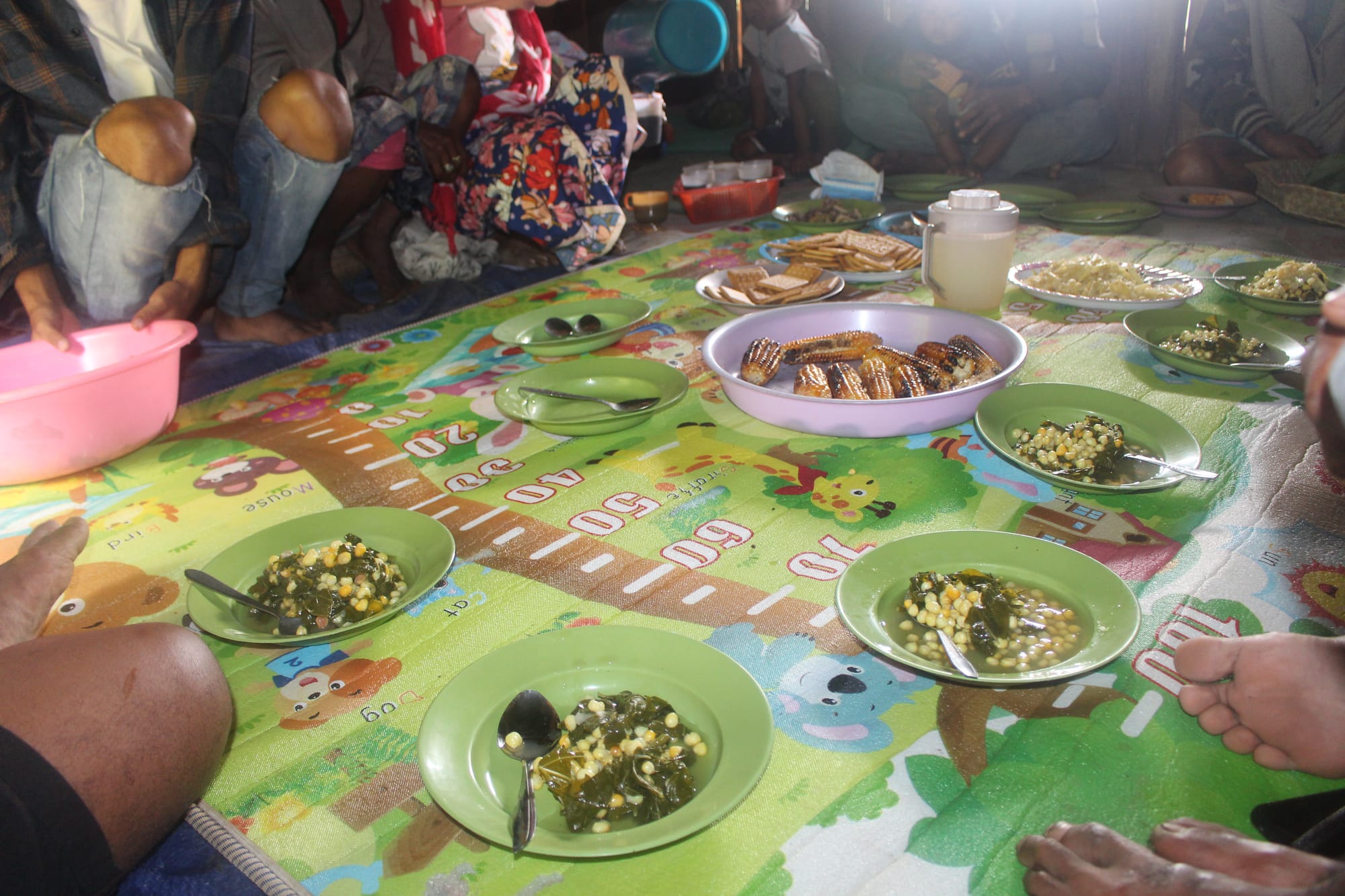
The new corn is served two ways: boiled with passion fruit leaves and roasted. Alongside it are bamboo shoots, rooster boiled without salt or oil, cookies, coffee and a traditional Timorese alcoholic drink. Everything is laid out on the mat, which doubles as a tablecloth.
As lia-nain, Uncle Tian is the first to eat. He starts with the half ear of corn that was shelled earlier and has now been roasted. By doing so, he signals that the families of the Uma Malae Biru may begin eating corn from the new harvest.
While they eat, the family members try to speak Tetum-Praça so their visitors can understand. This Portuguese-influenced form of Tetum, spoken in the capital, Dili, serves as a common language across the country. Tetum is an official language alongside Portuguese under the 2002 constitution. Switching to Tetum-Praça is one more courtesy from people who have already let outsiders witness the ceremony.
Amid stories and talk about their children’s futures, lunchtime soon arrives. Once again, the women cook while the katuas, or elders, wait inside and outside the house with the adult men and the children. Someone calls out: “Lunch is ready.”
Arranged in the right-hand corner are the lafatik, the candle, a blue tray of food for the ancestors and a glass of tua mutin, a drink made from coconut palm sap. There, Uncle Tian offers the sacred dish to the bei-ala and the lulik, which are regarded as one. The ritual is called se’a in Idaté and seka in Tetum. In his prayer, the lia-nain asks for a blessing on all the descendants of the sacred house, the generations of families who belong to it.
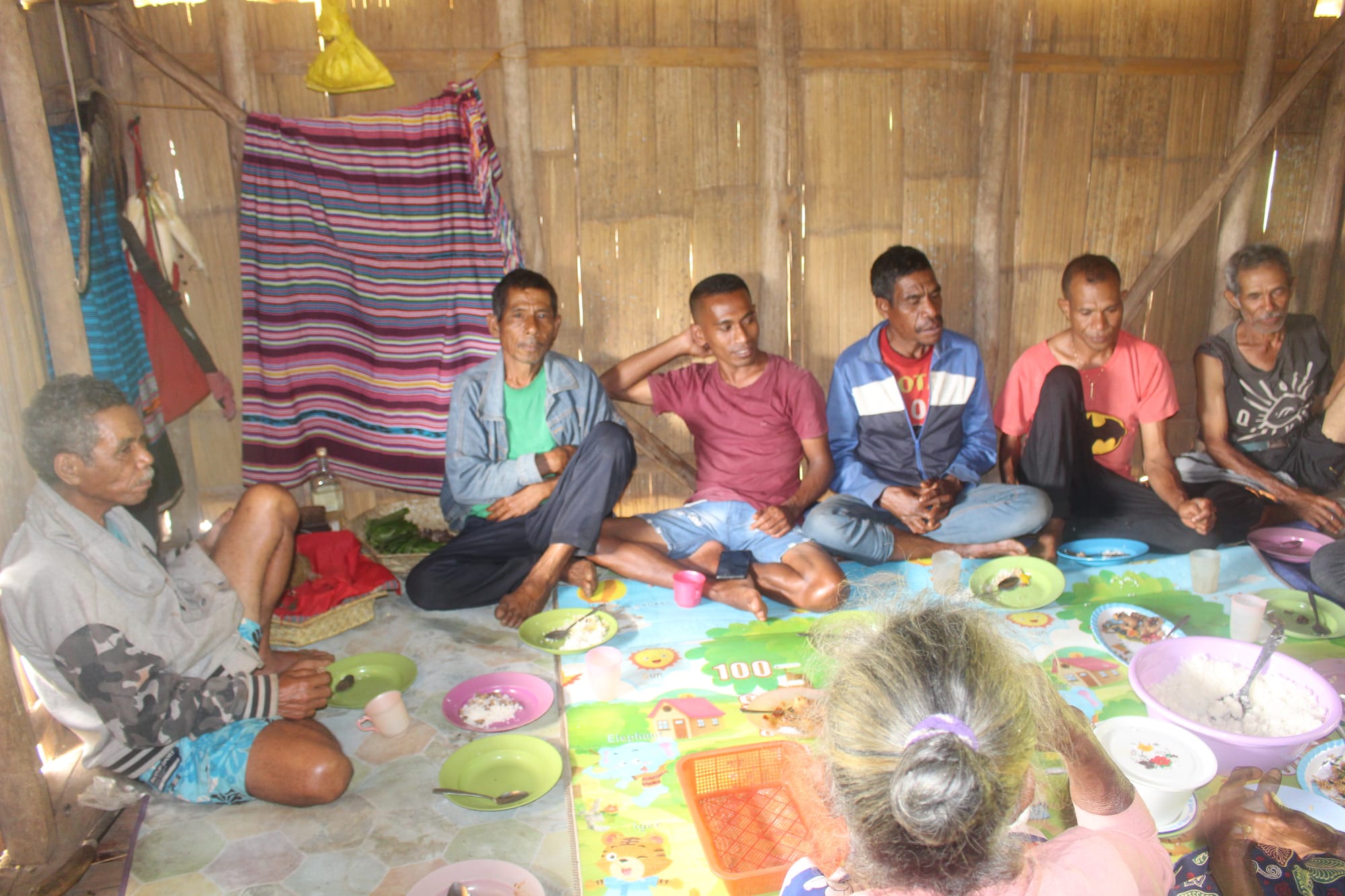
The family sits with heads bowed around the food laid out in the middle of the mat, listening to the prayer. Plastic plates cover boiled chicken, fried chicken, pasta, beans, bamboo shoots and chili, but steam from the hot rice escapes through a gap and drifts across the house. To drink, there is tua mutin and tua sabu.
After the prayer, Uncle Manuk, a brother of the lia-nain, invites everyone to eat in a ritual dialogue called hola lia. He thanks the ancestors for the abundant harvest and asks for blessings on the members of the uma lulik. He then asks those present to accept the food as it is served and invites them to enjoy it. The family responds with sounds of assent: “Hee…,” “aaa…,” “eee….”
As plates pass from hand to hand, a camera flash startles the room. “We thought it was lightning,” Júlio said, and everyone laughed.
After the meal, the members of the house share the dish Uncle Tian offered to the ancestors and the sacred objects: the rooster’s organs with boiled rice.
Only then does the lia-nain reveal the sacred objects, which have stayed under a red cloth throughout the ceremony. They represent the legacy of past generations and have also been “fed” during Sau Batar. Because they are hidden from anyone outside the Uma Malae Biru, Diligente was not allowed to photograph them.
Finally, the lia-nain hands out betel and areca for everyone to chew. When many people attend, the ceremony closes with the dahur, a traditional Timorese circle dance with forward and backward steps. There is no dance this time: to save the families money, only a few people have come. Still, conversation and storytelling continue freely.
A house that has endured
The name Uma Malae Biru carries its own meaning. Uma means house, the place people return to in order to rest and recover from illness. Malae, the Tetum word for the foreigners who came to Timor-Leste, here conveys the idea of ruling, as the Portuguese once did. Biru refers to spiritual power in Timor-Leste.
In the past, only members of this sacred house could become liurai, the traditional rulers who held the highest title in a suco or locality. Under Portuguese rule, which lasted until 1975, authority was largely exercised indirectly through local kings who converted to Catholicism and became vassals of the Portuguese crown. Today, voters elect suco and hamlet chiefs, and leadership of the suco is no longer restricted to members of the sacred house.
Unlike in other sucos, however, the chief in Tasi-Fatin must always acknowledge the sacred house and ask its “permission” to be a good leader. This is known as receiving matak malirin, a phrase that literally means “freshness” but here signifies the sacred house’s blessing.
Over the years, the house has had to adapt so it does not become a financial burden on its families. Before any ritual, members hold a budget meeting to decide how much each will contribute, according to their means. The families know they cannot afford a big celebration every year.
The members of the sacred house set the budget and provide the money. The ceremony Diligente attended was a modest one: only three families took part, a very small share of all the families that belong to the Uma Malae Biru.
The last large-scale Sau Batar was held five years before that ceremony.
“We had a big celebration, because we were inaugurating the new house and moving the sacred objects from the old house to this one,” recalled a member of the uma lulik.
“At that time, there were a lot of people inside and outside the house, so it would have been impossible for Diligente to take part, and we would have needed at least two lafatik baskets filled with betel leaves and areca nuts,” he said.
Whatever the turnout, the budget or the adaptations required, Sau Batar has endured in Timorese culture from one generation to the next. Those who uphold the tradition believe that performing the ceremony guarantees a prosperous future, while failing to do so brings the worst curses and punishments from nature.