Bella and the Beasts
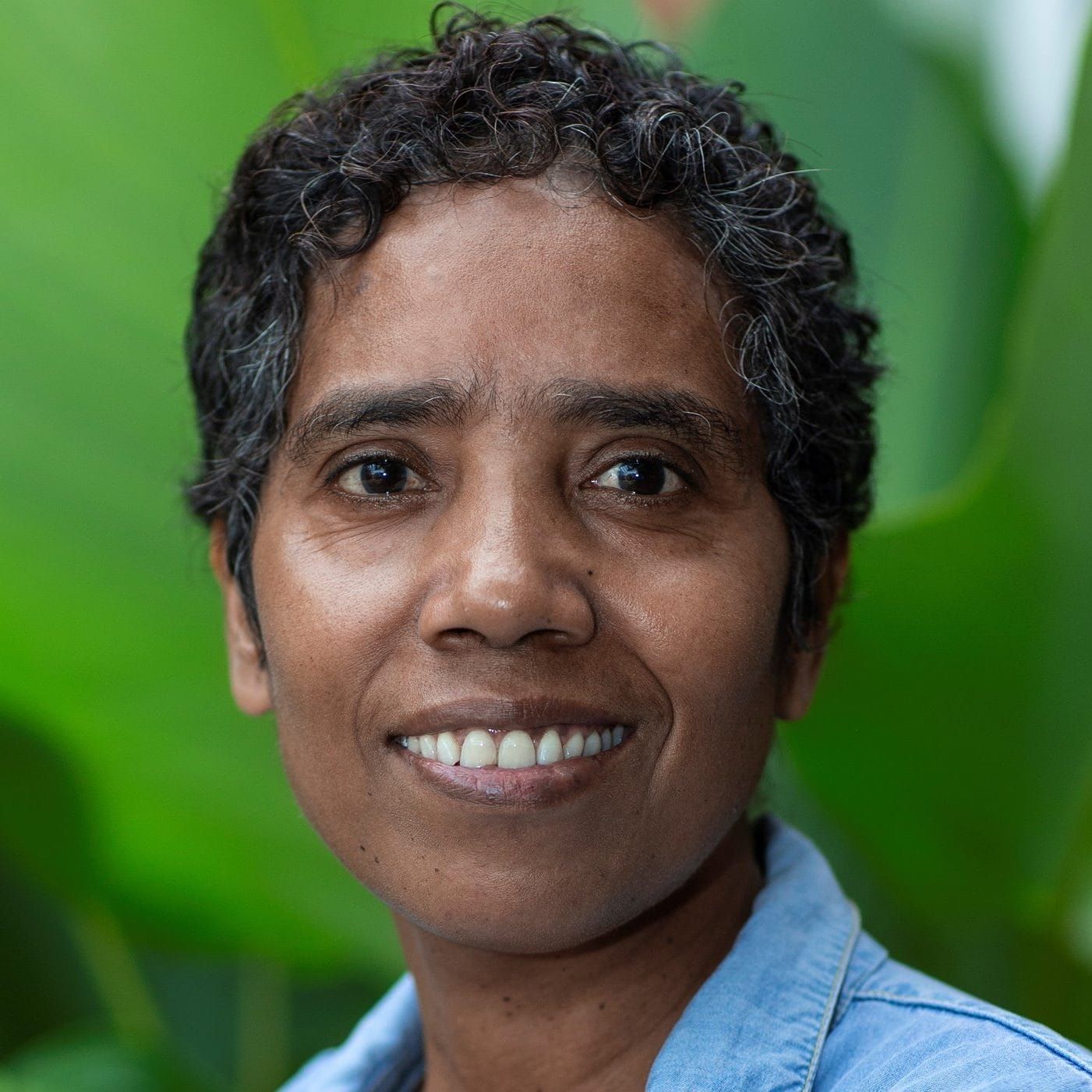
Bella Galhos was 3 when her father sold her to Indonesian soldiers for $5. She survived abuse and discrimination before becoming a leading advocate for Timor-Leste's independence, human rights and LGBTQ+ equality. Her life has been shaped by a determination to resist the limits others tried to impose on her.
By Miguel Taveiro
Originally published by Diligente on Jan. 6, 2023.
DILI, Timor-Leste — For the first four years of her life, Bella Galhos could not walk because of a hip condition. Even the possibility of medical care was denied to her.
Her mother wanted to take her to Portugal for treatment, but her father refused to authorize the trip, denying her that chance. With no other options, her mother turned to a traditional healer whose unconventional methods helped Bella walk. From then on, Bella repeatedly found ways to get back on her feet, often on her own.
Isabel Antónia da Costa Galhos, widely known as Bella Galhos, was born on November 10, 1972, to José António Galhos and Teresa da Costa Galhos. She was the first girl in a family of nine children. Her father reportedly had 45 children with 18 women, including Bella's mother, giving her eight siblings and 36 half-siblings.
A childhood shaped by violence and inequality
Bella remembers that during her first year at a school in Ainaro, a municipality south of Dili, she struggled to write while the other children were making better progress. She had learned to write her first words with her left hand, but the nuns required her to switch to her right. She still does not understand why they insisted on the change, but she believes it made learning to write more difficult.
From an early age, as the eldest daughter, Bella experienced the consequences of being born a girl. Her father wanted sons, not daughters. Her mother, by contrast, was delighted to have her first girl. As Bella grew older, her personality and behavior became more masculine, which angered her father.
Growing up in a large household, Bella worked in the fields alongside men, growing fruit to sell. Hers was a family marked by a lack of love and peace, where she endured physical and psychological violence.
Bella says that when she was just three years old, her father sold her for $5 to Indonesian soldiers, who sexually abused her and forcibly injected her with a contraceptive drug. She believes it left her infertile.
José Galhos later regretted what he had done and apologized to his daughter. Bella accepted his apology.
Bella was raised according to the patriarchal expectations she describes as prevalent in Timorese culture: daughters were expected to serve their fathers and brothers. In her account, boys were often treated like kings and regarded as the sole heirs to family property, while girls were left to tend to the household. Boys could pursue an education, whereas girls were raised to marry and have children.
Bella refused to accept that future.
Although her father had abandoned the family when the children were still young, he continued to believe he had the authority to dictate how their mother raised the children and what they were allowed to do. In his view, Bella should not continue her education.
Bella heard this and wept in silence.
At just 12, however, Bella confronted her mother. She said that if she were forced to leave school, only two options would remain: “prepare a coffin to bury me or prepare a coffin to bury you.”
Bella openly admits she considered poisoning her family when it was her turn to cook, or taking her own life. After hearing what her daughter said, her mother eventually allowed her to continue studying. Bella went on to attend lower secondary school and then completed upper secondary school in Becora, in Dili, her hometown.
Working to help her family survive
During the Indonesian occupation of Timor-Leste, from 1975 to 1999, teachers received a generous rice ration. Because Bella's mother was a teacher, her share was 100 kilograms a month. Bella sold 30 kilograms of it at the old market, where the Dili Convention Center now stands.
She did more than anyone else to help her mother and was always ready to take on additional work. She climbed trees to cut branches for firewood and, because they lived in Caicoli, an area with abundant water, she also cultivated kangkung, a local leafy green similar to spinach, in garden beds and sold it at the markets.
The family's financial difficulties were constant, and Bella did everything she could to help. One unexpected opportunity came from taking part in races. She had never wanted to be an athlete or even considered becoming one, but participating earned her the equivalent of $4, along with a package containing milk, eggs, green beans and bananas.
She would not give in to hardship. Whenever it rained, water leaked into the family's home, and Bella climbed onto the roof to cover the corrugated metal sheets that failed to keep the rain out. Her brothers showed little interest in helping.
She was also responsible for fetching water, preparing meals for her brothers and washing their dishes. They would issue orders in three curt words: “Bring me water.”
“They thought they had the authority to make me do everything,” she recalled. “Those were the rules we grew up with. I hated them.”
On one occasion, a brother shouted her name in the street to order her to bring him a glass of water. Bella crossed the road with the glass. He drank slowly, seemingly to mock her, while she stood waiting for him to finish so she could take it home.
“I didn't like it and I was very angry, but I did nothing,” she said.
Her brothers treated her with disrespect and violence. One brother, a boxer, sometimes beat her until she was covered in blood. Growing up, Bella came to believe that conflict and violence were normal.
Yet she often defended her younger brothers when others attacked them, using violence herself. Her cousins called her preman, an Indonesian word meaning “gangster” or “thug.” Bella never saw the label as an insult. To her, it reflected her ability to defend herself and others.
These repeated experiences left her feeling humiliated by her family and unable to be herself.
She also remembers finding a broken guitar one day and taking it home, hoping to repair it and learn to play. When her mother saw the instrument, she broke it.
“My mother was conservative, too,” Bella explained.
In her relationship with Bella's father, however, her mother had shown an independence she did not always allow her daughter: she chose to divorce him, a decision that few women at the time—and, Bella notes, even today—have the courage to make.
“I'm a rebellious daughter,” Bella said.
Fighting for Timor-Leste from Canada
At just 16, Bella joined the Timorese resistance, taking part in clandestine activities against the Indonesian occupation.
After the 1991 Santa Cruz massacre, when Indonesian troops opened fire on a memorial procession in Dili, she spent three years working undercover to gain the Indonesian government's trust. The effort left her exposed to repeated abuse, both physical and emotional.
In 1994, she was selected for the Canada World Youth exchange program and sent to Canada, where Timor-Leste was presented as Indonesia's 27th province. The Indonesian government intended her to serve as a pro-Indonesian voice, even as she secretly supported the Timorese resistance from abroad.
She soon sought political asylum and remained in Canada until 1999.
When she arrived, she was not fluent in English and relied heavily on her dictionary. As soon as she could, she enrolled in English classes and learned the language quickly. Bella was the only Timorese person in Ottawa and needed to communicate to survive.
She remembers finding it difficult to adjust to Canadian culture, the language and the bitterly cold climate. She also noticed a contrast between the two societies.
“In Timor, people are very close to one another. In Canada, people are individualistic,” she said.
During her time in Canada, Bella hosted José Ramos-Horta, then the special representative of Timorese resistance leader Xanana Gusmão and later Timor-Leste's president. She also welcomed Abel Barreto, another Timorese exile living in Toronto. Both Bella and Barreto were political refugees working to support Timor-Leste's independence.
Ramos-Horta appointed her a political attaché. As a woman at the forefront of the independence movement, she takes pride in having drawn international attention to events in Timor-Leste.
As a spokesperson for the Timorese cause, she traveled to 33 countries to make the case for Timor-Leste's independence.
“Everyone recognized my struggle, but no one valued it more than Ramos-Horta,” Bella said.
She recalled that he considered her “an example for other Timorese in the diaspora because, even though she was alone, she managed to make a difference, while other Timorese, often even in groups, did not.”
In Canada, Bella organized demonstrations marking key dates in the independence struggle, including November 12, the anniversary of the Santa Cruz massacre, and December 7, the date Indonesian troops invaded Timor-Leste. Members of the local community who knew about her work supported her efforts.
Benjamin Parwoto, Indonesia's ambassador to Canada, learned of Bella's pro-independence activities. In January 1996, he sought out her mother and tried to persuade her to call Bella and convince her to stop.
Instead, her mother called to encourage her.
“Believe in yourself and keep going,” she told Bella.
Bella kept up her campaign until the end of the Indonesian occupation in 1999.
Her final protest came that same year, when she went on a two-day hunger strike. She wanted to show that, just as Timorese people were dying in Timor-Leste, she too was willing to starve herself to death in Canada for her country's cause.
Bella returned home only after the August 30, 1999, referendum, in which Timorese voters chose independence from Indonesia. She arrived in December of that year, feeling that her mission had been accomplished.
Defending human rights and LGBTQ+ equality
For Bella, defending human rights comes naturally. She believes that advocating for a cause requires constant study of the issues involved.
Throughout her life, she has delivered talks on human rights, addressing gender issues, LGBTQ+ rights, harassment and women's empowerment in Timor-Leste and internationally. Her advocacy has taken her across Asia, North America and Australia.
Between 1999 and 2002, under the United Nations Transitional Administration in East Timor (UNTAET), Bella regularly appeared on UNTAET Radio, where she continued speaking about LGBTQ+ rights and other human rights issues.
Her broadcasts prompted hundreds of young people who had concealed their gender identities and sexual orientations to approach her for help.
That work helped give rise to the LGBTQ+ rights movement in Timor-Leste. ARCOIRIS Timor-Leste, which Bella co-founded with Iram Saeed, grew out of that movement.
After coming out, Bella experienced several forms of discrimination, including within her own family. One of her brothers assaulted her and twice tried to kill her. He also called her “an abnormal woman.”
People around her frequently made disparaging comments about her clothing, the way she walked and her voice.
“Many Timorese people think being LGBTQ+ is a choice, and many thought I was pretending,” she said.
Building a family with Iram
Bella met her partner, Iram Saeed, in Hawaii. Bella was there to study, while Iram was participating in an Asia-Pacific leadership program.
After Bella completed her studies, they maintained a long-distance relationship for a year before Iram moved to Timor-Leste to live with Bella.
Iram's family knows about the relationship and accepts it.
When asked to describe Bella, Iram said she loved her partner's simplicity and kindness, her determination to find solutions to problems, her care for her family and her support for her relatives' education. She believes the two of them are very much alike.
Bella was moved by her words. It was the first time she had heard her partner speak about her in that way.
The couple has a daughter, Irabela Teresa Galhos Júnior. Bella says Irabela has never been bullied for having two mothers.
She believes her daughter is prepared to deal with bullying if it happens because she is being raised to become an “international citizen who respects other people's decisions and knows how to defend herself.”
Bella and Iram have made two commitments to each other: not to swear and not to resort to physical violence. Bella says they have never broken either commitment. In July 2024, they married in a civil ceremony in Darwin, Australia, with President Ramos-Horta as a witness.
Bella's youngest brother, a priest, has never judged her. To him, she is someone special who has always tried to do good for others.
Some priests, however, have criticized Bella for her relationship with Iram. She rejects their criticism, arguing that they have no moral grounds to judge her sexual orientation because the relationship is consensual and involves two adult women.
Bella also recalls a highly respected Timorese nun who once tried to discuss the relationship with her. Bella refused to let the nun challenge her choice of partner or question what she did in bed.
“I believe God does not ask nuns and priests to write reports so that, one day, when we die, God can call them in and ask for those reports,” she said.
Together, Bella and Iram founded Leublora Green Village in Maubisse, a center for environmental education and social development established to create economic opportunities and improve the quality of life of Timorese communities.
From being sold for $5 to a life of purpose
Bella Galhos serves as an adviser to President José Ramos-Horta. Her work has included promoting women's economic empowerment.
In November 2023, Bella became the first person from Timor-Leste to be named to the BBC’s 100 Women list, which the British public broadcaster has published every year since 2013. She learned of the honor about two weeks before her 51st birthday, after ignoring repeated calls from an unknown number that turned out to be a BBC journalist.
“I never in my life imagined I would be selected,” she told Diligente. She believes the recognition reflected her willingness to speak openly about issues that remain taboo in Timor-Leste, including violence against women, LGBTQ+ rights and poor leadership.
Bella decided to write her autobiography, provisionally titled I Was Once Worth Five Dollars, after reading Michelle Obama's Becoming. Her greatest source of inspiration, she says, remains her mother.
Reflecting on her life, Bella describes herself as a woman at peace, “rich in love and people.”
She once dreamed of having a bedroom so large that three cars could fit inside it. That dream, along with many others, has since come true.
Despite the challenges she has faced, Bella Galhos keeps getting back on her feet, day after day.